



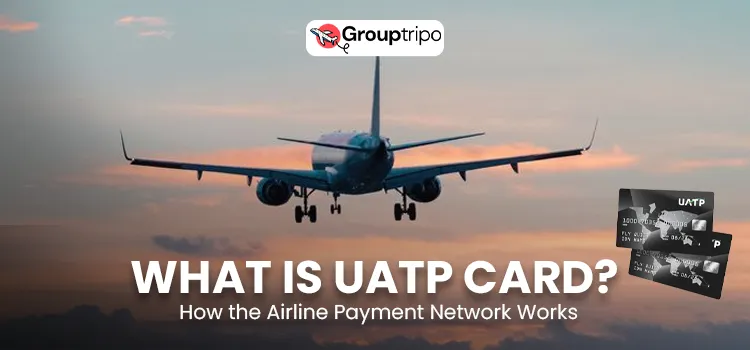
Ever wonder how MNC corporations manage and pay for thousands of business flights a year without getting buried in credit card fees, fraud risks, and messy employee expense receipts? The answer is UATP (Universal Air Travel Plan). It is the financial base behind the corporate travel industry. Owned by the world’s major airlines, this low-cost payment network bypasses traditional credit card companies for large business travel.
Whether you are an enterprise travel manager trying to cut down on currency conversion fees/ a procurement leader looking for cleaner data tracking, here is a simple breakdown of what UATP is and exactly how it works.
Understanding UATP: What is a Universal Air Travel Plan Card?
The Universal Air Travel Plan is a global airline-owned payment network dedicated to the business travel industry. Unlike consumer payment networks like Visa/ Mastercard/ American Express/, UATP functions as a closed-loop transaction network. It is created to simplify billing and lower payment processing fees for large-volume commercial travel.
A UATP account is not a standard credit card used for general entertainment/ dining/ retail expenses. It is an enterprise-level financial device issued by airlines to corporations. It acts as an internal corporate charge account issued on a dedicated network infrastructure. It allows businesses to consolidate their global travel expenditures through their chosen airline partner.
How Does a UATP Card Work for Corporate Travel?
A UATP account operates through a direct billing arrangement between the issuing carrier and the corporate client.
- When a corporate traveler/ an travel management company purchases airfare/ rail tickets/ travel services, the transaction is processed across UATP’s central transaction processing system, ATCAN.
- Instead of routing the transaction through an external merchant acquiring bank, the charge goes through the dedicated corporate payment rail. The transaction details are compiled using comprehensive tracking metrics, including PNR, flight segments, routing codes and corporate cost centers.
- The corporate subscriber does not receive fragmented monthly bills for individual employee charges. The network consolidates all global travel expenses into a single invoice.
- This detailed statement integrates into enterprise resource planning software and expense management platforms. It allows accounts payable teams to reconcile thousands of individual ticket purchases simultaneously.
Who Issues UATP Cards?
UATP accounts are issued by major commercial airlines globally. Each issuing carrier manages its own underwriting criteria/ credit terms/ infrastructure for its corporate subscribers. A UATP account issued by one specific airline is natively accepted across the entire network by hundreds of other participating carriers and travel agencies worldwide.
Major global network carriers act as primary issuers. They offer billing services tailored to their regional markets. Legacy carriers provide corporate accounts that integrate with localized financial structures across the Americas, Europe, and the Asia-Pacific region. These issuing airlines use the network to build deep commercial relationships with enterprise clients. It positions its corporate accounts as core financial tools for modern corporate travel management.
Main Benefits of Using UATP for Enterprise Expense Management
Use payment network offers major operational advantages over traditional commercial cards:
- Comprehensive Data Capture: Traditional credit card networks capture basic data points like the merchant name, date, and transaction amount. UATP records travel data at the point of sale. Every line item includes routing data, ticket numbers, carrier codes and corporate reference fields.
- Complete Spend Centralization: By routing global air and rail expenditures through a single corporate account, procurement teams can monitor travel outlays in real time. This prevents fragmented spending outside of corporate travel policies and provides companies with clear data analysis.
- Mitigating Payment Fraud: These accounts are restricted to travel-related merchants; the risk of employee abuse/ external fraud is low. Corporate administrators can apply strict transaction controls, including credit limits, carrier restrictions and expiration dates on virtual accounts.
Where Can You Use a UATP Card?
Despite being a closed-loop network, UATP features a global acceptance footprint within the travel industry. It is accepted as a valid form of payment by:
- Over 260 commercial airlines globally, including low-cost carriers and major international network operators.
- Major passenger rail networks across North America, Europe, and Asia.
- Global Distribution Systems such as Amadeus, Saber, and Travelport.
- Thousands of certified Travel Management Companies and online corporate booking engines.
Grouptripo Tip: Use Interchange Kickback Strategy. When you issue the UATP card from one airline but book flights using that card from a competing airline, the latter will be required to pay the network merchant fee. This fee is then kicked back by the issuing airline in the form of a volume rebate.
Virtual vs. Physical UATP Accounts: Which Does Your Business Need?
When establishing a corporate program, businesses can choose between virtual accounts or physical plastic cards based on their internal travel workflows.
| Feature | Virtual UATP Accounts | Physical UATP Cards |
| Primary Deployment | Centralized in corporate booking tools, GDS platforms, or managed TMC profiles. | Issued to individual high-frequency travelers, corporate executives, or field personnel. |
| Security Level | High | Moderate |
| Operational Focus | Ideal for automated and centralized corporate purchasing and large group bookings. | Ideal for on-the-road travel changes/ purchasing tickets at airline service counters. |
| Reconciliation | Transactions route to designated corporate cost centers. | Managed via centralized billing, requiring confirmation of individual cardholder usage. |
UATP vs. Traditional Corporate Credit Cards
Traditional commercial credit cards are universal tools for broad business spending. They lack the structural focus required for large-scale airline procurement.
- Merchant Fees: Traditional credit cards subject airlines to high merchant fee percentages on every transaction. UATP operates on a lower-cost internal network fee structure. It allows corporations to negotiate better commercial terms with carriers by cutting out expensive external payment processing networks.
- Spend Boundaries: Traditional corporate cards allow expenditures across any merchant category, from hospitality and dining to office supplies. UATP is restricted to certified travel merchants. It provided built-in compliance with corporate travel policies.
- Data Granularity: Commercial card data requires secondary data feeds to capture itinerary information. This suffers from transmission errors. UATP records complete, itemized passenger and route details natively at the exact moment of transaction authorization.
Hidden Fees Eliminated: Currency Conversions and UATP Restrictions
A major financial advantage of this network is the elimination of the hidden cross-border fees that inflate international corporate travel budgets. Traditional credit card issuers apply a foreign transaction fee of 1% to 3% whenever a ticket is issued in a foreign currency/ processed by an overseas acquiring bank. UATP completely eliminates these foreign exchange and international processing fees. It isolates the corporate client from currency conversion premiums.
Companies must account for network limitations before deploying an account. It cannot be used for non-travel expenses such as hotel incidentals/, car rentals/ client entertainment. Corporate procurement teams must structure their payment policies to use virtual accounts for airfare and rail components.
The Bottom Line!
UATP remains a foundational tool in commercial aviation finance, providing enterprises with deep data clarity, enhanced security, and significant cost savings on transaction processing. By choosing the right account format and using strategic airline relationships, corporate finance leaders can transform their travel program from a complex administrative hurdle into a streamlined, highly cost-effective operational asset.
If you want any assistance with UATP Card and travel plans, contact Grouptripo today. Our team is available 24/7 at your request. We also provide assistance for flight bookings regardless of the airline and route.
Disclaimer: The information given in this blog is for informational purposes only. Enterprise card features/ acceptance structures/ fee schedules and corporate program policies vary by issuing airline. They are subject to change based on current network regulations and individual corporate underwriting terms. For live information, contact the official network carrier representative to review current corporate terms.
Frequently Asked Questions
The Universal Air Travel Plan is a closed-loop payment network privately owned and operated directly by the world’s commercial airlines. Established in 1936 as the industry’s first corporate charge card, UATP acts as a dedicated B2B payment infrastructure for travel-related expenses.
An enterprise must apply through a participating issuing airline. The corporate applicant must submit an official credit application alongside two years of audited financial statements/ annual corporate reports. The issuing carrier will then perform formal underwriting.
A UATP refund is automatically routed back to the original form of payment. This means funds are credited directly to the corporation’s centralized UATP account balance rather than to an individual employee’s personal card. For canceled flights/ corporate route changes, the refund is initiated by a corporate travel management company via a Global Distribution System.
UATP travel protection is provided automatically to corporate travelers when their commercial airline tickets are charged to an active corporate account issued by major carriers like American Airlines/ Delta/ United. The core network benefit includes complimentary Common Carrier Accidental Death & Dismemberment insurance alongside basic checked baggage protection.
Yes, UATP cards are widely accepted by airline group booking blocks, making them a preferred payment option. Corporate travel coordinators can use a virtual UATP account to pay for large flight contracts arranged directly through specialized corporate group desks.
The corporate group travel divisions of all major global network carriers accept UATP as a primary form of payment. This includes the Delta Flight Group desk, American Airlines Group Travel services and the Alaska Group Desk. Low-cost carrier frameworks like JetBlue Corporate Group Travel natively accept these accounts.

Categories:
Tags:


Recent Articles
-

Oman Air Business Class Experience Comfort, Luxury & More -

How Can I Select My Seat on Virgin Australia Flights? -

How Does Singapore Airlines Seat Selection Work? -

Turkish Airlines Seat Selection Rules & Fees 2026 -

Delta Airlines Cancellation Policy 2026: Fees & Refund Rules

 +1-833-894-5333

